1. Energy Storage Market Growth Drivers
Energy storage systems are experiencing rapid growth driven by the expansion of renewable energy generation, grid modernization initiatives, and the need for enhanced power system flexibility.
• Battery energy storage, in particular, is deployed across a range of applications including frequency regulation, peak shaving, renewable energy firming, backup power, and behind-the-meter applications.
• Power conversion systems are critical enablers for energy storage deployment.
2. STARPOWER Power Conversion System Architecture
Battery energy storage systems require bidirectional power conversion capability to handle both charging (AC to DC) and discharging (DC to AC) modes.
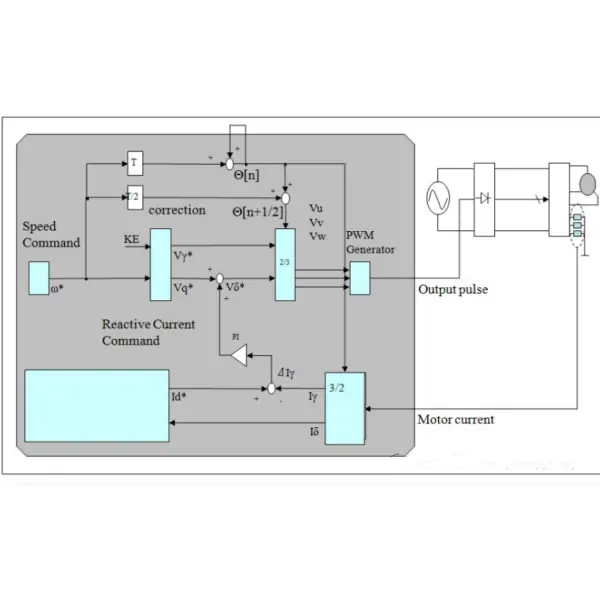
• The power conversion system (PCS) typically consists of a grid-side converter, a DC link, and a battery-side converter or DC-DC stage.
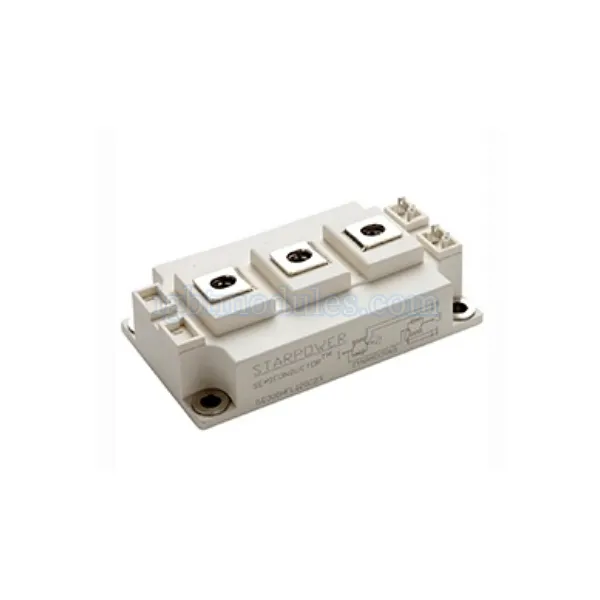
• IGBT modules serve as the primary switching devices in these converter systems, managing the bidirectional power flow with high efficiency and precise control.
3. PCS Design Requirements
Power conversion systems for energy storage must meet stringent performance requirements.
• High efficiency across the full operating range is essential for maximizing round-trip efficiency.
• Fast dynamic response enables participation in frequency regulation and other grid services.
• Grid support functions such as reactive power capability, voltage support, and fault ride-through are increasingly required by grid codes.
• Reliability and long service life are critical given the investment scale of storage installations.

4. IGBT Module Selection for ESS
Selecting IGBT modules for energy storage PCS applications involves evaluating voltage and current ratings, switching characteristics, thermal performance, and reliability track record.
• Voltage ratings of 1200V and 1700V are common for utility-scale systems, with current ratings scaled to the PCS power rating.
• Module packaging should support parallel operation for high current applications, and thermal interface design is important for maintaining junction temperatures within safe limits.
5. Technology Trends and Outlook
The energy storage market continues to evolve with growing deployment scale and advancing technology.
• Higher power PCS units reduce system cost per megawatt and simplify installation.
• Advanced control algorithms enable more sophisticated grid services.
• Wide bandgap devices, particularly silicon carbide, are beginning to penetrate the energy storage PCS market, offering potential improvements in efficiency, power density, and cooling system simplification.
6. Recommended IGBT Module Models
STARPOWER Product model selection guide for this application
| Model | Voltage | Current | Package | Topology |
|---|---|---|---|---|
| DG140A12TDFS | 1200V | 140A | T2 | – |
| DG50H12T2 | 1200V | 50A | T2 | – |
| DG160X07TDSM | 650V | 160A | T2 | – |
| GD400MJA100F6S | 1000V | 400A | F6 | 3-level I-NPC |
| GD275MJS120L6S | 1200V | 275A | L6 | 3-level I-NPC |
| GD300MLX65C2S | 650V | 300A | C2 | 3-level I-NPC |
| GD300HFX120C6SA | 1200V | 300A | C6.1 | Half Bridge |
| GD450HFX120C6S | 1200V | 450A | C6.1 | Half Bridge |
| GD600HFX120C6S | 1200V | 600A | C6.1 | Half Bridge |
Showing 9 representative models out of 30 total available modules