1. On-Board Power Market Overview
The on-board power supply industry is experiencing significant growth driven by advancing electric vehicle technology and accelerating intelligent vehicle trends.
• As a critical component of vehicle electrification, on-board power systems play an essential role in enhancing vehicle performance, safety, and comfort.
• The market is evolving toward higher power levels, greater efficiency, reduced weight and volume, and increased intelligence and connectivity.
2. Key Industry Requirements
Several key trends define on-board power supply requirements.
• High power and high efficiency with lightweight and compact form factors address both performance and range considerations.
• Intelligent and networked capabilities support advanced vehicle features and over-the-air updates.
• Safety and reliability remain paramount, with strict automotive qualification requirements.
• Customization and personalization options differentiate vehicle models and brands.
3. On-Board Charger Technology
On-board chargers (OBC) represent a primary on-board power function, converting AC from the charging infrastructure to DC for battery pack charging.
• Modern OBC designs incorporate power factor correction stages and isolated DC-DC conversion stages, typically using IGBT or SiC power devices.
• Bidirectional OBC designs enable vehicle-to-grid and vehicle-to-home capabilities, adding further functionality.

4. DC-DC Converter Applications
DC-DC converters handle voltage conversion between different voltage levels within the vehicle electrical system.
• The primary DC-DC converter steps down high-voltage battery power to the 12V or 48V auxiliary supply, powering traditional vehicle electronics and control systems.
• Efficiency, reliability, and compact size are critical requirements for these converters, which must operate across the full range of vehicle operating conditions.
5. Power Module Selection and Design
Selecting appropriate power modules for on-board power applications requires consideration of voltage ratings, current requirements, switching frequency targets, and thermal constraints.
• Both IGBT and MOSFET solutions find application depending on the specific power level and topology.
• Package selection addresses form factor constraints and thermal management requirements, while automotive qualification ensures reliability across the vehicle service life.
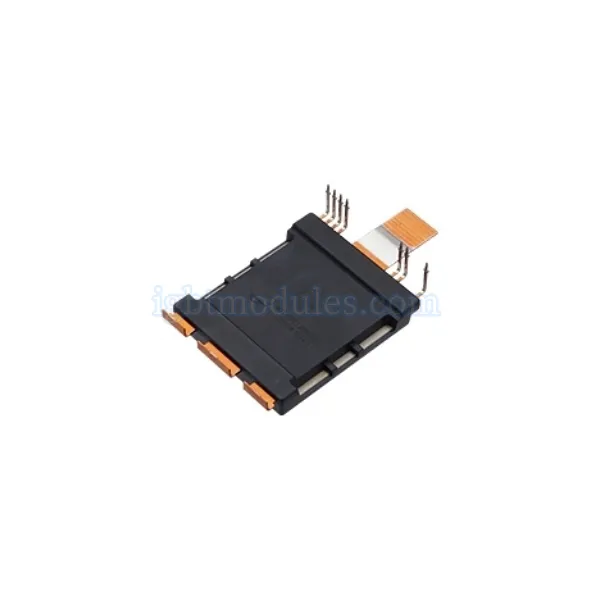
6. Recommended IGBT Module Models
Product model selection guide for this application
| Model | Voltage | Current | Package | Topology |
|---|---|---|---|---|
| DG140A12TDFS | 1200V | 140A | T2 | – |
| DG40F07TAFM | 650V | 40A | T2 | – |
| DG75S12T2 | 1200V | 75A | T2 | – |
| DM170S12TDRB | 1200V | – | T2 | – |
Showing 4 representative models out of 4 total available modules