1. Photovoltaic Inverter Market Overview
Photovoltaic inverters convert the direct current produced by solar cells into alternating current that meets grid power quality requirements, enabling integration with general AC power supply equipment.
• The performance of PV inverters directly affects the stability, generation efficiency, and service life of the entire photovoltaic system.
• As the installed capacity of photovoltaic power continues to grow rapidly, demand for IGBT modules in inverter applications expands accordingly.
2. Inverter Classification and Applications
Photovoltaic inverters are generally classified into three categories based on power rating, internal circuit structure, and application scenario: central inverters, string inverters, and micro-inverters.
• Central inverters serve large-scale utility-scale installations, string inverters address commercial and industrial rooftop systems, and micro-inverters find application in residential and small commercial installations.
• Each category has different power semiconductor requirements.
3. IGBT Role in PV Inverters
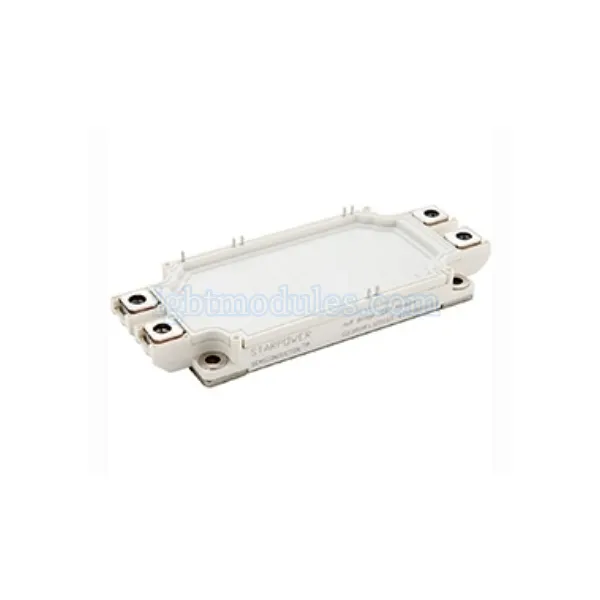
IGBT modules serve as core components in photovoltaic inverters, handling the DC-to-AC power conversion at the heart of the system.
• The rapid growth of installed photovoltaic capacity drives inverter industry expansion, which in turn creates growing market demand for IGBT devices.
• Higher efficiency, improved reliability, and reduced cost per kilowatt remain key industry objectives that IGBT technology development continues to address.
4. Topology Considerations
Various inverter topologies are employed in photovoltaic applications, each with different advantages and use cases.
• Common configurations include two-level voltage source inverters, three-level NPC (Neutral Point Clamped) topologies, and other multi-level configurations.
• The choice of topology depends on factors such as power rating, efficiency targets, harmonic requirements, and cost constraints.
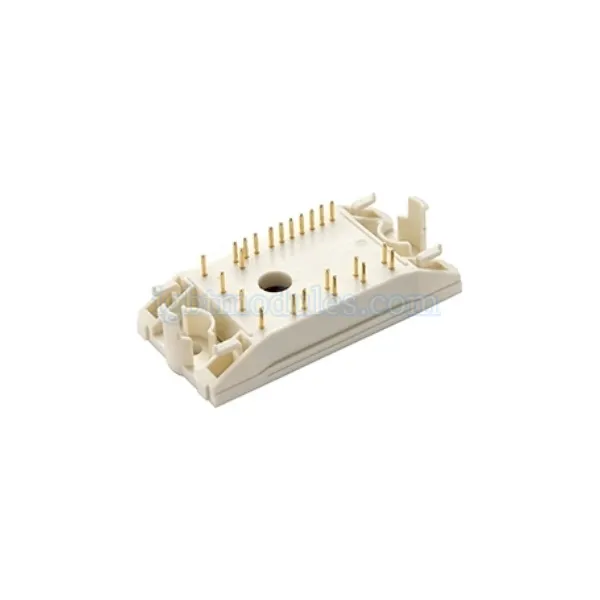
• IGBT module selection must align with the specific topology requirements.
5. Efficiency and Reliability Optimization
Efficiency is a critical performance parameter for photovoltaic inverters, directly impacting energy yield and system economics.
• Advanced IGBT technologies with reduced switching and conduction losses contribute to higher inverter efficiency.
• Reliability is equally important, as PV systems typically have service life expectations of 25 years or more.
• Module selection, thermal design, and protection circuitry all contribute to long-term reliability.
6. Recommended IGBT Module Models
STARPOWER Product model selection guide for this application
| Model | Voltage | Current | Package | Topology |
|---|---|---|---|---|
| DG140A12TDFS | 1200V | 140A | T2 | – |
| DG75H12T2 | 1200V | 75A | T2 | – |
| GD400MJA100F6S | 1000V | 400A | F6 | 3-level I-NPC |
| GD650MJA100L6Q | 1000V | 650A | L6 | 3-level I-NPC |
| GD300HFX120C6SA | 1200V | 300A | C6.1 | Half Bridge |
| GD600HFX120C6SA | 1200V | 600A | C6.1 | Half Bridge |
| GD400TAS100L6S | 1000V | 400A | L6 | 3-level A-PNC |
| GD800AYS100F6S | 1000V | 800A | F6 | 3-level A-PNC |
| GD200TFS100F6S | 1000V | 200A | F6 | Boost |
| GD200DFS100F6S | 1000V | 200A | F6 | Boost |
Showing 10 representative models out of 40 total available modules.