1. Gate Driver Chip Requirements in EV Applications
1.1 Electrical Isolation and Safety Standards
In electric vehicle power electronics, galvanic isolation between the low-voltage control circuitry and the high-voltage power stage is a fundamental safety requirement. Isolated gate driver chips provide this isolation barrier, with isolation ratings of 3000Vrms to 5000Vrms meeting automotive safety standards. The isolation prevents high-voltage transients from reaching sensitive controller circuits, protecting both the electronics and vehicle occupants. Reinforced isolation is often required for automotive applications, demanding driver chips that meet standards such as VDE 0884-10 and UL 1577.
1.2 Switching Speed and Propagation Delay
EV drive systems operate at switching frequencies from 10kHz to 100kHz or higher, requiring gate driver chips with short propagation delays and matched timing between channels. Low propagation delay skew is essential for preventing shoot-through in half-bridge configurations and for maintaining precise timing in multi-phase motor drives. The BTD series driver chips are designed with optimized propagation delay characteristics to support the high-frequency switching demands of modern EV traction inverters and auxiliary power converters.
1.3 Automotive Environmental Qualifications
Gate driver chips for EV applications must meet automotive qualification standards including AEC-Q100 for integrated circuits. This requires operation across extended temperature ranges (typically -40C to +150C), resistance to thermal cycling, and robustness against mechanical vibration and electrical transients. The driver chip packaging, die attach, and wire bond design must be validated for the lifetime and reliability expectations of automotive electronic systems, which typically span 15 years or more.
2. Bronze Gate Driver Chip Product Overview
Bronze QTJ Technology offers isolated and non-isolated gate driver chips for automotive and industrial power conversion applications. The following table compares the key specifications of four driver chip product families.
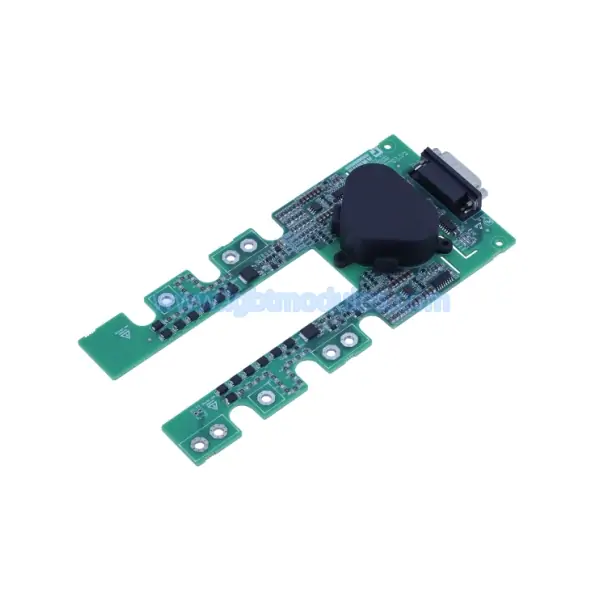
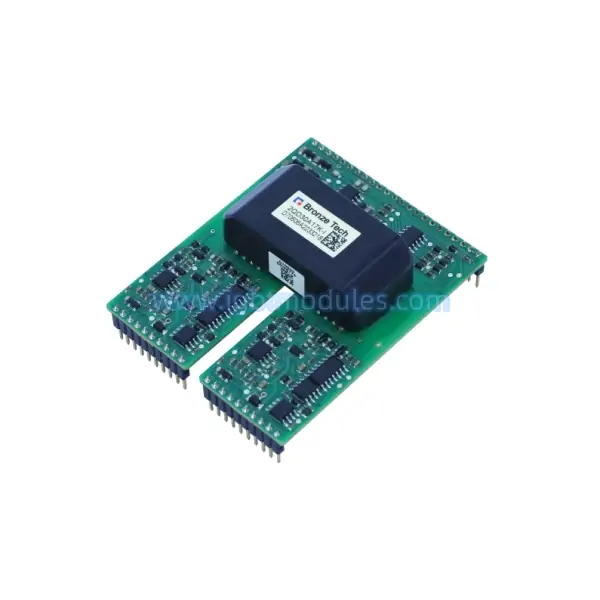
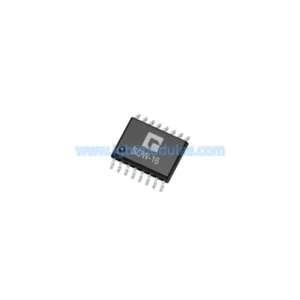
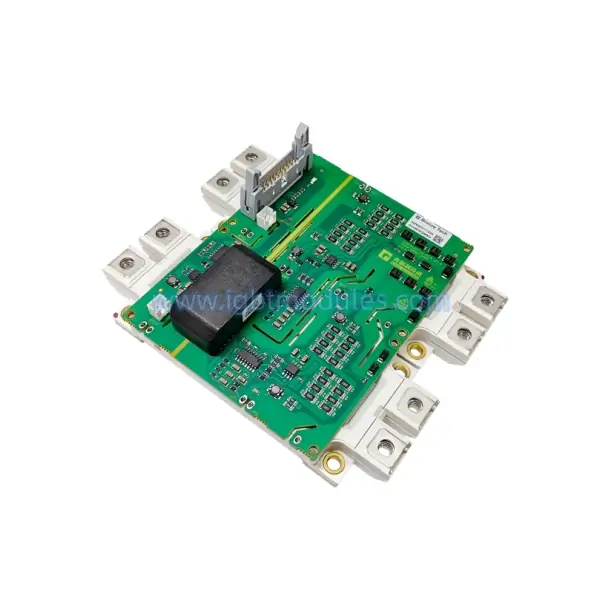
Figure: Isolated gate driver chip package for EV power electronics applications.
2.1 Product Comparison Table
| Model | Peak Current | Isolation | Channels | Package | Applications |
|---|---|---|---|---|---|
| BTD3011R | 15A | 5000Vrms | 1 (Isolated) | SOIC-16W | EV drive systems, motor drives |
| BTD25350 | 10A | 5000Vrms | 1 (Isolated) | SOIC-16W | DC-AC solar inverters, motor drives |
| BTD5350x | 10A | 3000/5000Vrms | 1 (Isolated) | SOIC-16W | Air conditioner compressors, motor drives |
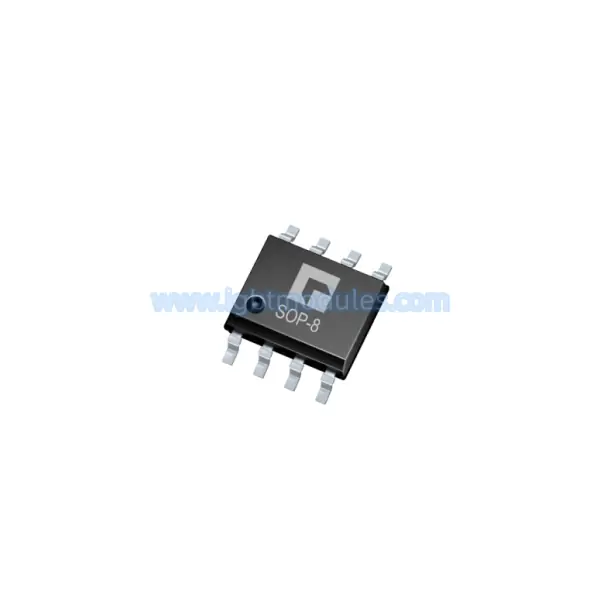
| BTL2752x | 5A | N/A (Low-Side) | 1 (Non-Isolated) | SOP-8 | Motor drives, auxiliary power |
3. Application in EV Power Electronics
3.1 EV Traction Drive Systems
The EV traction inverter converts the DC power from the battery pack into variable-frequency AC power for the electric motor. The BTD3011R gate driver chip, with its 15A peak output current and 5000Vrms isolation, provides the drive capability and safety isolation required for IGBT or SiC MOSFET power modules in traction inverters. The high peak current ensures rapid charging and discharging of the power device gate capacitance, supporting the fast switching transitions needed for efficient motor drive operation.
3.2 EV Air Conditioner Compressor Drives
Electric vehicle air conditioning systems use dedicated motor drives to control the compressor, operating from the high-voltage battery. The BTD5350x gate driver chip, available with 3000Vrms or 5000Vrms isolation ratings, provides the isolation and drive capability for these compressor motor drives. With 10A peak output current, the BTD5350x supports the switching requirements of the IGBTs or MOSFETs used in compressor inverter circuits, in a compact package suitable for space-constrained automotive electronics.
3.3 DC-AC Solar Inverter Integration
The BTD25350 gate driver chip, with 10A peak current and 5000Vrms isolation, is suitable for DC-AC solar inverter applications where isolated gate drive is required for safety and performance. In microinverters and string inverters, the BTD25350 provides the isolation barrier between the control circuit and the power switching devices, supporting reliable operation in grid-tied solar power conversion systems. The compact SOIC-16W package enables high-density PCB layouts in space-limited inverter designs.
4. Chip-Level Features and Protection Functions
4.1 Integrated Isolation Technology
The BTD-series isolated gate driver chips utilize chip-scale isolation technology, integrating the isolation barrier within the IC package. This approach eliminates the need for external isolation components such as optocouplers or pulse transformers, reducing component count and improving system reliability. The integrated isolation provides consistent performance across temperature and aging, with isolation ratings validated to international safety standards including VDE 0884-10 and UL 1577.
4.2 Under-Voltage Lockout and Fault Protection
All driver chip models include under-voltage lockout (UVLO) protection, which prevents the power device from operating when the gate drive supply voltage is below the threshold required for reliable turn-on. This protects the IGBT or MOSFET from operating in the linear region, where excessive conduction losses could cause thermal failure. The BTD-series chips also provide fault status output signals, allowing the system controller to detect and respond to driver or power device faults.
4.3 Low-Side Driver for Auxiliary Circuits
The BTL2752x series provides 5A peak output current for low-side gate drive applications where isolation is not required. This driver chip is suitable for auxiliary power circuits, bootstrap diode replacement, and non-isolated motor drive configurations. The compact SOP-8 package and low gate drive current make the BTL2752x appropriate for lower-power switching stages in EV and industrial systems where board space and cost are constrained.
5. Design Considerations for EV Integration
5.1 PCB Layout and Parasitic Management
In EV power electronics, the PCB layout around the gate driver chip significantly affects switching performance and EMI. The gate loop should be minimized to reduce parasitic inductance, which can cause voltage ringing and false turn-on during switching transitions. The BTD-series chips are designed with pin layouts that support compact gate loop routing, and the driver output stage is optimized for low source impedance to drive the gate line efficiently.
5.2 Thermal Performance in Automotive Packages
The SOIC-16W package used for the BTD-series isolated drivers provides a balance of thermal performance and board area efficiency. Thermal resistance from junction-to-ambient and junction-to-case must be considered in the system thermal design, ensuring that the driver chip operates within its specified temperature range under all driving conditions. For high ambient temperature environments typical in automotive engine compartments, PCB copper area and thermal vias may be used to improve heat dissipation from the driver package.
5.3 System-Level Safety and Diagnostics
In EV applications, the gate driver chip is part of the safety-critical power conversion chain. The fault detection and status reporting features of the BTD and BTL series chips support system-level safety architectures, including ASIL (Automotive Safety Integrity Level) compliance for traction drive systems. The driver chips provide the real-time fault information needed by the vehicle controller to implement safety responses such as power shutdown, torque limitation, or transition to limp-home mode in the event of a power stage fault.