1. IGBT Driver Requirements in Photovoltaic Inverters
1.1 Switching Efficiency and Energy Yield
In photovoltaic inverter systems, switching efficiency directly impacts the energy yield of the solar installation. IGBT drivers must deliver precise gate drive signals that minimize switching losses while maintaining acceptable electromagnetic interference (EMI) levels. The driver must provide sufficient gate current to charge and discharge the IGBT gate capacitance rapidly, ensuring clean switching transitions that reduce energy loss during each switching cycle. This is particularly important in PV inverters that operate at high switching frequencies to reduce filter component size and cost.
1.2 Three-Level Topology Support
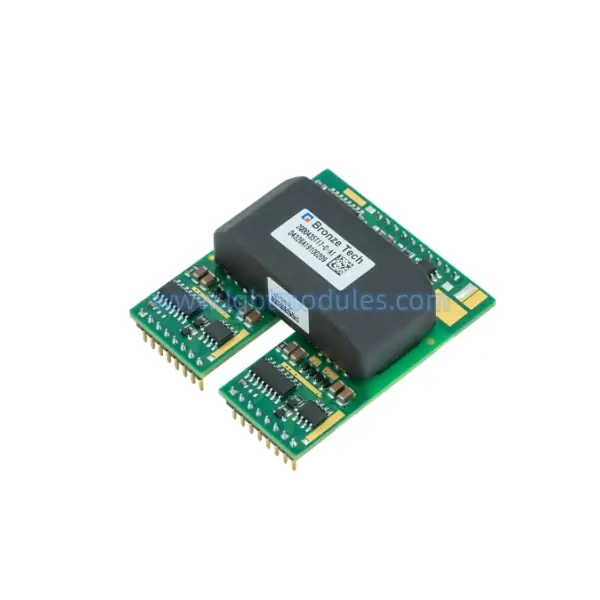
Many photovoltaic inverters employ three-level (NPC or T-type) converter topologies to achieve high efficiency and low harmonic distortion. These topologies require IGBT drivers that can support the specific switching sequences and dead-time requirements of three-level bridge configurations. The 2QD0225T12xx-3L driver core is designed for three-level inverter applications, providing the independent gate drive channels and protection functions needed for multi-level converter structures.
1.3 Environmental and Thermal Considerations
Photovoltaic inverters are installed in outdoor environments with wide temperature variations, humidity, and dust exposure. IGBT driver solutions must operate reliably across extended temperature ranges and withstand thermal cycling caused by varying solar irradiance throughout the day. The driver components must be selected and qualified for long-term operation in these conditions, with attention to solder joint reliability, component derating, and thermal management design.
2. Bronze IGBT Driver Product Overview
Bronze QTJ Technology provides IGBT driver solutions for the EconoDual and EconoDual3 module families commonly used in photovoltaic inverters. The table below compares the key specifications of three driver products for PV inverter applications.
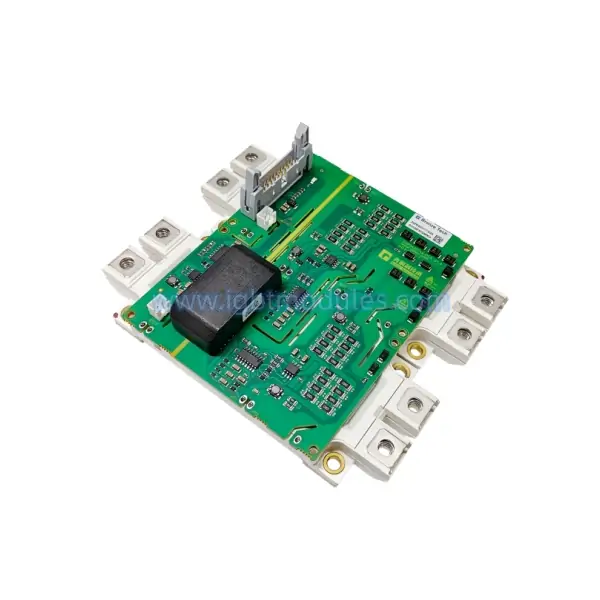
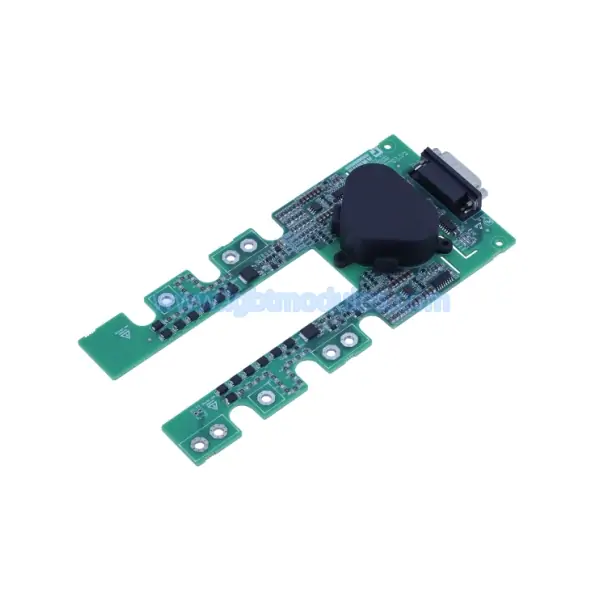
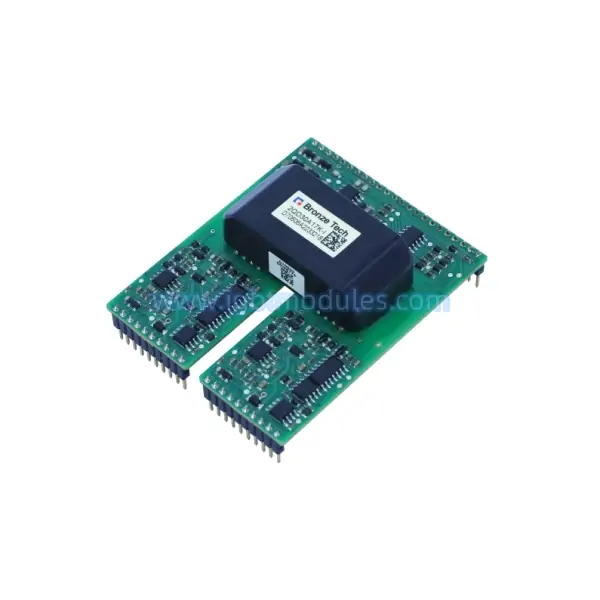
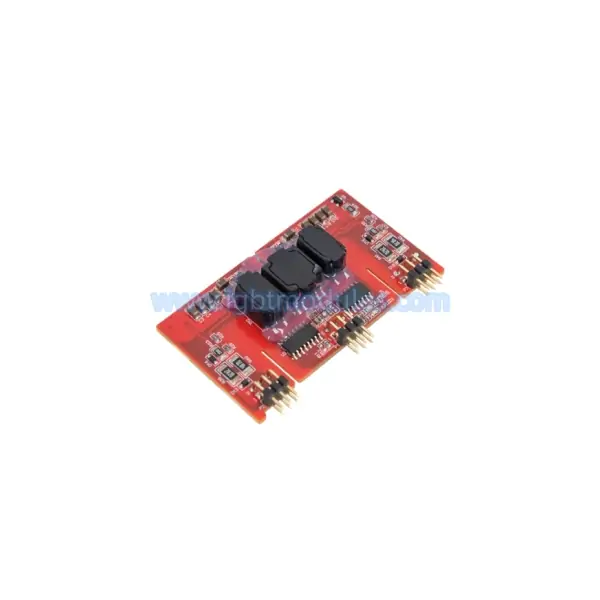
Figure: IGBT driver solution for EconoDual module packages used in photovoltaic inverters.
2.1 Product Comparison Table
| Model | Voltage | Gate Current | Power | Package | Applications |
|---|---|---|---|---|---|
| 2QP0225Txx | 1200V | 25A | 4W | EconoDual | PV inverters, string inverters |
| 2QP0115Txx-C | 1700V | 15A | 3W | EconoDual3 | PV inverters, string inverters |
| 2QD0225T12xx-3L | 1200V | 25A | 4W | Driver Core (3-Level) | PV inverters, string inverters |
3. Application in Photovoltaic Inverter Topologies
3.1 String Inverter DC-AC Conversion
String inverters convert the DC output of a series-connected string of PV panels into grid-compatible AC power. The 2QP0225Txx driver, designed for EconoDual 1200V IGBT modules, provides the gate drive capability for these inverters. With a peak gate current of 25A, the driver ensures fast switching of EconoDual modules, supporting the high-frequency operation needed for compact filter design in string inverter products. The driver integrates short-circuit protection and fault feedback to protect the inverter during abnormal operating conditions.
3.2 Higher-Voltage PV Systems with EconoDual3
As photovoltaic systems move toward higher DC string voltages for efficiency and cost optimization, 1700V IGBT modules in EconoDual3 packages become relevant. The 2QP0115Txx-C driver is designed for these modules, providing the appropriate gate drive current and protection features for 1700V EconoDual3 IGBT modules. This combination supports PV inverter designs that operate at higher DC link voltages, enabling reduced conduction losses and improved system efficiency.
3.3 Three-Level NPC Inverter Configurations
Three-level NPC (Neutral Point Clamped) inverter topologies are widely used in photovoltaic inverters for their high efficiency and low harmonic output. The 2QD0225T12xx-3L driver core is specifically designed for three-level configurations, supporting 1200V IGBT modules in the NPC bridge structure. The driver core provides the multi-channel gate drive and protection logic required for synchronized switching of the inner and outer switches in each phase leg, including dead-time management and fault detection for each switch position.
4. Driver Features and Protection Mechanisms
4.1 Short-Circuit Protection via Desaturation Detection
All three driver models implement desaturation (Vce-sat) monitoring for short-circuit protection. When the collector-emitter voltage exceeds a defined threshold during the on-state, the driver detects a fault condition and initiates a controlled shutdown of the IGBT. This protection mechanism responds within microseconds, preventing thermal destruction of the IGBT module during short-circuit events caused by inverter faults or grid disturbances. The soft turn-off function limits the voltage overshoot during fault clearing.
4.2 Gate Monitoring and Supply Supervision
The driver solutions include gate signal monitoring and power supply supervision functions. Under-voltage lockout (UVLO) ensures that the IGBT is not driven with insufficient gate voltage, which could result in excessive conduction losses or incomplete turn-on. Gate monitoring detects open or shorted gate connections, alerting the inverter control system to wiring or component faults. These supervision functions are important in PV inverters where long-term unattended operation is expected.
4.3 Isolation and Noise Immunity
Galvanic isolation between the control logic and the IGBT power circuit is provided through integrated isolation barriers. This isolation prevents ground loops and protects control circuitry from high-voltage transients. The driver design incorporates filtering and noise rejection techniques to ensure reliable gate drive signal delivery in the electrically noisy environment of a PV inverter, where high-frequency switching generates significant EMI.
5. System Integration and Performance Optimization
5.1 Gate Resistor Selection and Switching Optimization
The driver solutions support adjustable gate resistance values, allowing inverter designers to optimize the trade-off between switching speed, switching losses, and EMI generation. By selecting appropriate gate resistors, the switching transitions can be tuned for the specific IGBT module and inverter layout. This optimization is critical in PV inverters where maximizing efficiency across the full load range contributes to higher energy harvest from the solar array.
5.2 Thermal Cycling Considerations
Photovoltaic inverters experience thermal cycling due to the daily variation in solar irradiance and ambient temperature. The IGBT driver solutions are designed to withstand these thermal cycles, with component selection and PCB layout practices that minimize thermal stress. The driver mounting method and thermal interface with the IGBT module contribute to the overall thermal management of the inverter, ensuring reliable operation over the expected service life of the PV installation.
5.3 Grid Code Compliance and Inverter Response
Modern PV inverters must comply with grid code requirements for reactive power support, fault ride-through, and harmonic performance. The driver solutions support these requirements by providing fast and reliable IGBT switching that enables the inverter controller to respond rapidly to grid conditions. The protection features of the drivers ensure that the IGBT modules are safeguarded during grid faults, allowing the inverter to ride through voltage dips and continue supplying power as required by grid interconnection standards.