1. Medium Voltage Inverter Applications
Medium voltage frequency converters, typically operating at 660V to 690V or 1140V, serve critical roles across multiple industrial sectors.
• Applications include municipal water supply systems, submersible oil pumps and injection pumps in oil fields, and various mining equipment such as main shaft fans, belt conveyors, and roadheaders in coal mines.
• These deployments have delivered measurable economic and social benefits through improved energy efficiency and process control.
2. High Voltage Inverter Market Drivers
High voltage frequency converters, operating above 1140V, address the substantial energy consumption of pump-type loads in industries such as metallurgy, chemicals, power generation, municipal water supply, and mining.
• Pump loads account for approximately 40 percent of total industrial energy consumption, with electricity costs representing up to 50 percent of water production costs in water treatment facilities.

3. Topology Configurations
Medium and high voltage inverter systems employ multiple topology configurations to achieve the required voltage levels and performance characteristics.
• Three primary topology approaches are commonly used in the industry, each offering different trade-offs in terms of component count, harmonic performance, reliability, and cost.
• Selection depends on specific application requirements regarding voltage level, power rating, power quality standards, and total cost of ownership.
4. IGBT Module Requirements
Medium and high voltage applications impose stringent requirements on IGBT modules.
• Higher voltage ratings, typically 1700V and above, are necessary to handle the elevated DC bus voltages.
• Series and parallel configurations of IGBT modules may be employed to achieve the required voltage and current levels.
• Robust insulation, reliable gate drive signals, and proper voltage sharing across series-connected devices are critical design considerations.
5. Energy Efficiency and Cost Benefits
Implementing high voltage variable frequency drives for pump and fan loads yields substantial energy savings and operational improvements.
• Beyond direct energy cost reduction, benefits include improved process control, enhanced product quality, reduced mechanical stress on equipment, and extended equipment lifespan.
• The combination of energy savings and operational improvements typically results in favorable return on investment calculations for medium and high voltage drive installations.
6. Recommended IGBT Module Models
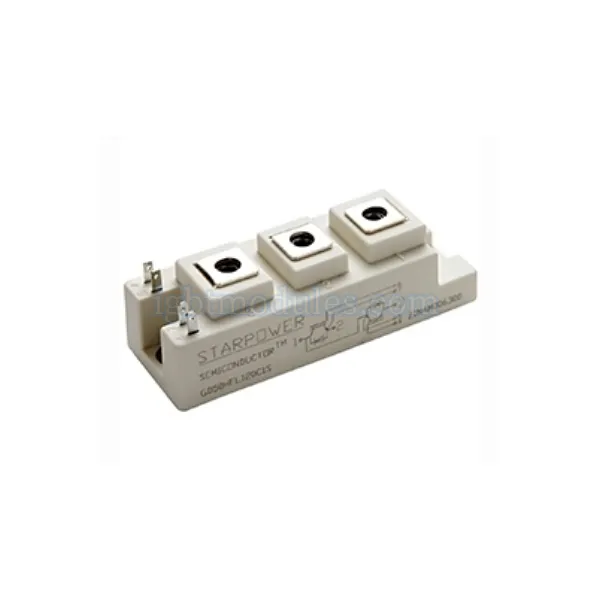
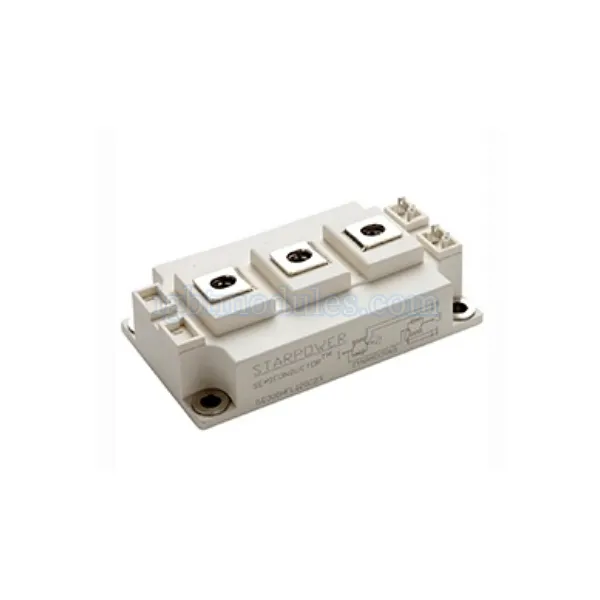
STARPOWER Product model selection guide for this application
| Model | Voltage | Current | Package | Topology |
|---|---|---|---|---|
| GD1000HFX170P2S | 1700V | 1000A | P2 | Half Bridge |
| GD400HFX170C2S | 1700V | 400A | C2 | Half Bridge |
| GD100PFX170C6SG | 1700V | 100A | C6 | 3-Phase Rectifier + 4-Pack |
| GD150PFX170C6SG | 1700V | 150A | C6 | 3-Phase Rectifier + 4-Pack |
| GD100HCX170C6SA | 1700V | 100A | C6.1 | Single Phase H-Bridge |
| GD150HCX170C6SA | 1700V | 150A | C6.1 | Single Phase H-Bridge |
| GD300MPX120C6SA | 1200V | 300A | C6.1 | 3-level I-NPC |
| GD300MNX120C6SA | 1200V | 300A | C6.1 | 3-level I-NPC |
| GD50PIX170C6SA | 1200V | 50A | C6 | PIM |
Showing 9 representative models out of 18 total available modules