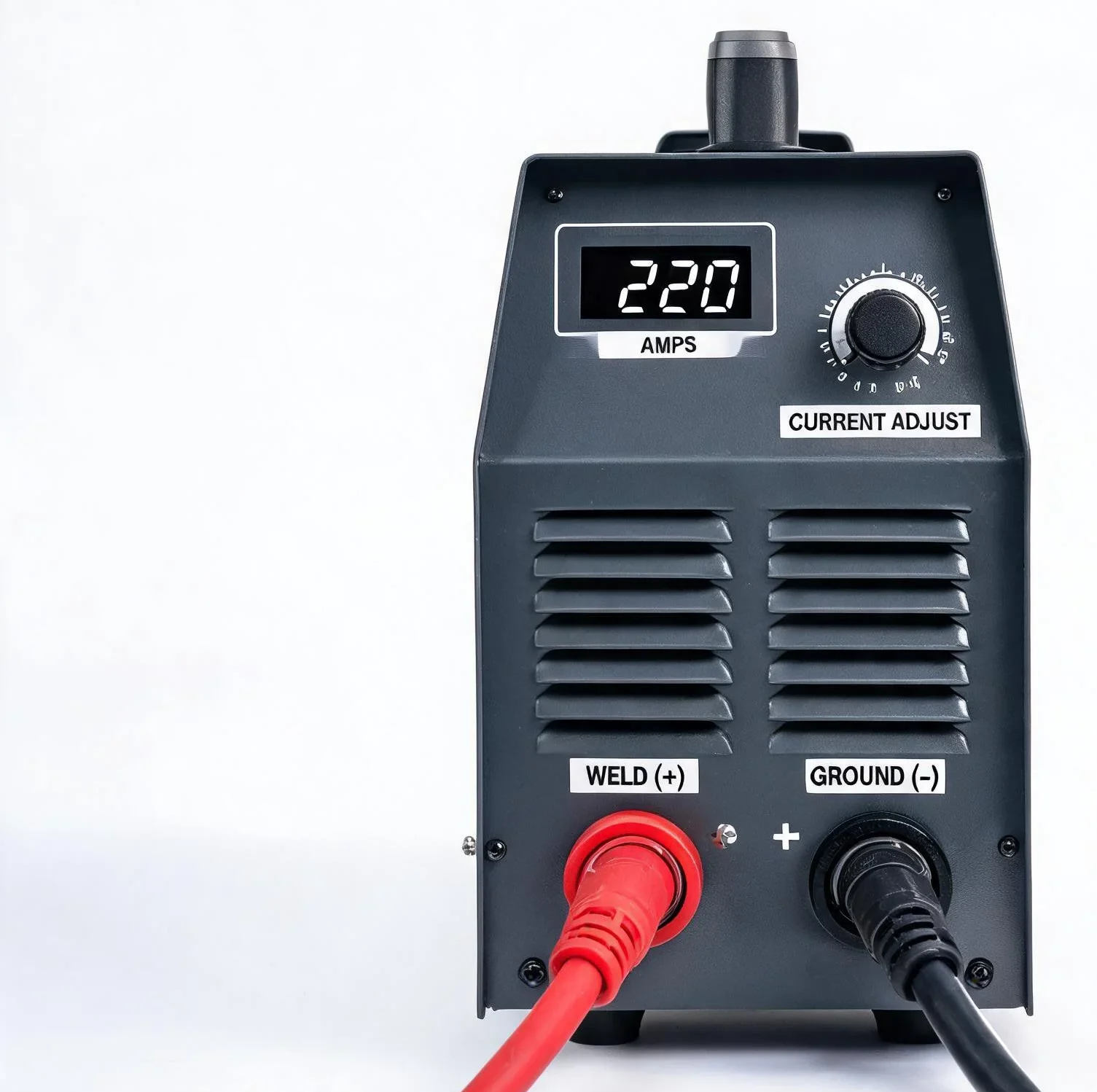
IGBT Module Selection Solutions for Welding Machine Applications
Welding machines represent one of the most important application areas for IGBT modules, covering various welding processes including manual arc welding, TIG welding, CO2 shielded welding, and submerged arc welding. This article provides detailed IGBT module selection solutions for different welding current ratings and bridge topologies, including both hard-switching and soft-switching module configurations, offering comprehensive model selection guidance for welding machine design engineers.
Welding Machine IGBT Module Selection Table
The following table lists IGBT module selection options for both full-bridge and half-bridge topologies at different welding current ratings, providing module models for both hard-switching and soft-switching operating modes:
| Bridge Topology | Welding Process | Rated Welding Current | Hard-Switching Module | Soft-Switching Module |
|---|---|---|---|---|
| Full Bridge | Manual Welding / TIG Welding / CO2 Welding | 350A | GD50HFU120C1S | GD50HFL120C1S |
| Full Bridge | Manual Welding / TIG Welding / CO2 Welding | 400A | GD50HFU120C1S | GD50HFL120C1S |
| Full Bridge | Manual Welding / TIG Welding / CO2 Welding | – | GD75HFU120C1S | GD75HFL120C1S |
| Full Bridge | Manual Welding / TIG Welding / CO2 Welding | – | GD75HFU120B3S | GD75HFL120B3S |
| Full Bridge | Manual Welding / TIG Welding / CO2 Welding | 500A | GD75HFU120C1S | GD75HFL120C1S |
| Full Bridge | Manual Welding / TIG Welding / CO2 Welding | – | GD75HFU120B3S | GD75HFL120B3S |
| Full Bridge | Manual Welding / TIG Welding / CO2 Welding | – | GD100HFU120C1S | GD100HFL120C1S |
| Full Bridge | Manual Welding / TIG Welding / CO2 Welding | – | GD100HFU120C2S | GD100HFL120C2S |
| Full Bridge | Manual Welding / TIG Welding / CO2 Welding | – | GD100HFU120B3S | GD100HFL120B3S |
| Full Bridge | Manual Welding / TIG Welding / CO2 Welding | 630A | GD150HFU120C2S | GD150HFL120C2S |
| Full Bridge | Manual Welding / TIG Welding / CO2 Welding | – | GD150HFU120B3S | GD150HFL120B3S |
| Full Bridge | Submerged Arc Welding | 1000A | GD200HFU120C2S | GD200HFL120C2S |
| Full Bridge | Submerged Arc Welding | – | GD300HFU120C2S | GD300HFL120C2S |
| Full Bridge | Submerged Arc Welding | 1250A | GD300HFU120C2S | GD300HFL120C2S |
| Half Bridge | Manual Welding / TIG Welding / CO2 Welding | 400A | GD100HFU120C2S | – |
| Half Bridge | Manual Welding / TIG Welding / CO2 Welding | – | GD100HFU120B3S | – |
| Half Bridge | Manual Welding / TIG Welding / CO2 Welding | – | GD100HFL120C2S | – |
| Half Bridge | Manual Welding / TIG Welding / CO2 Welding | – | GD100HFL120B3S | – |
| Half Bridge | Manual Welding / TIG Welding / CO2 Welding | 500A | GD200HFU120C2S | – |
| Half Bridge | Manual Welding / TIG Welding / CO2 Welding | – | GD200HFL120C2S | – |
Full-Bridge Topology Welding Module Selection
Full-bridge topology is suitable for high-power welding applications, covering welding currents from 350A to 1250A. For 350A manual welding/TIG welding/CO2 welding, GD50HFU120C1S (hard-switching) or GD50HFL120C1S (soft-switching) modules are recommended. When the welding current increases to 500A, GD75 or GD100 series modules can be selected. Submerged arc welding applications above 1000A require GD200 or GD300 series high-power modules.
Half-Bridge Topology Welding Module Selection
Half-bridge topology is suitable for medium-power welding applications from 400A to 500A. For 400A welding machines, GD100HFU120C2S or GD100HFU120B3S modules can be selected; for 500A welding machines, GD200HFU120C2S modules are recommended. The half-bridge configuration reduces the number of power devices compared to full-bridge, lowering system cost, but the module’s current margin must meet peak welding current requirements.
Hard-Switching vs Soft-Switching Module Selection
Hard-switching (HFU) modules are suitable for welding applications with lower switching frequencies and cost-sensitive requirements; soft-switching (HFL) modules reduce switching losses through zero-voltage switching (ZVS) technology, making them suitable for high-frequency welding and applications with higher efficiency requirements. Both module types are package-compatible at the same current rating, allowing designers to flexibly choose based on the welding machine’s efficiency targets and cost budget.
Welding Machine IGBT Module Application Considerations
Welding machines operate in harsh environments, requiring special attention during module selection: frequent start-stop cycles during welding generate significant thermal cycling stress, necessitating modules with strong power cycling capability; welding spatter and dust environments require modules with good package sealing; under high-frequency switching conditions, drive circuit and snubber circuit design must be optimized to reduce EMI interference. Additionally, the module’s thermal design should consider thermal equilibrium under different duty cycles of the welding machine.