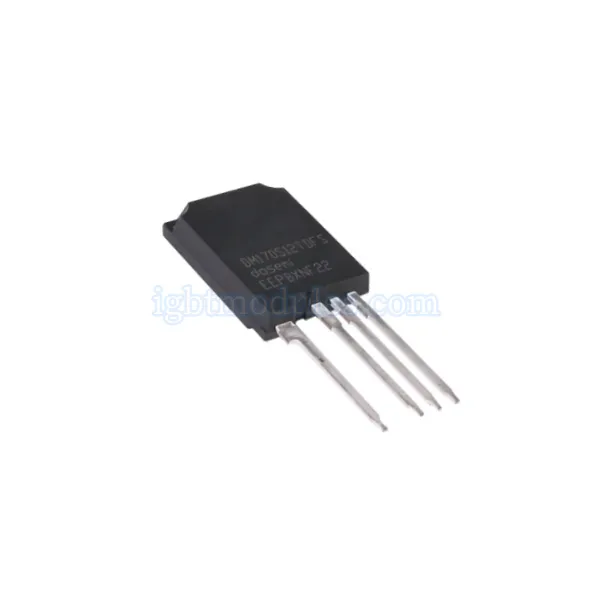
1. Role of IGBT Modules in Electric Vehicles
IGBT modules play a critical role in electric vehicle powertrains, representing one of the core technologies in new energy vehicles.
• As the primary device for energy conversion and transmission, IGBTs handle the transformation between direct current from the battery pack and alternating current for the drive motor.
• Beyond power conversion, IGBT modules enable variable frequency control of AC motors, providing precise speed regulation for vehicle propulsion.
2. IGBT Applications in Main Drive Systems
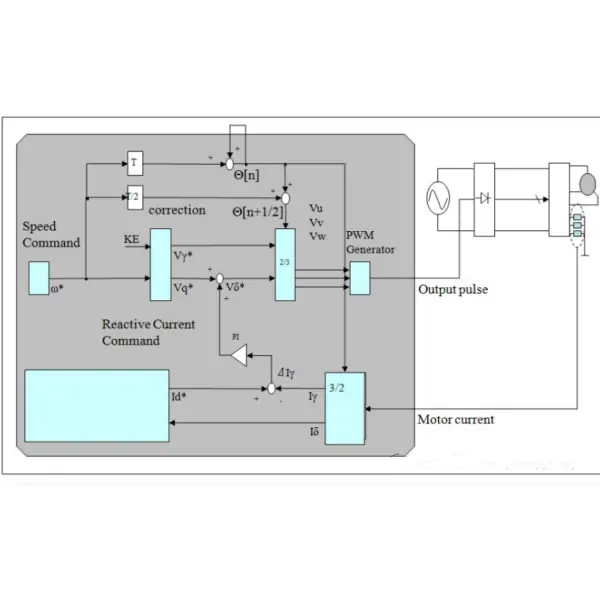
The main traction inverter, powered by IGBT modules, converts the high-voltage DC from the battery pack into three-phase AC to drive the electric motor.
• This conversion process enables precise control of motor torque and speed across the full operating range, from low-speed high-torque launch conditions to high-speed cruising.
• Additionally, during regenerative braking, the same IGBT modules operate in reverse, converting AC from the motor back to DC to recharge the battery pack.
3. SiC Module Advantages for EV Applications

Silicon carbide modules offer significant performance improvements over conventional IGBT technology in electric vehicle applications.
• Lower switching and conduction losses contribute directly to improved vehicle efficiency and extended driving range.
• Higher power density enables more compact inverter designs, freeing up valuable vehicle space and reducing overall weight.
• The ability to operate at higher temperatures also simplifies thermal management requirements.
4. Main Drive Topology Architecture
The main drive system topology in electric vehicles typically consists of a three-phase voltage source inverter configuration using six power semiconductor devices in a bridge arrangement.
• Modern implementations often integrate these devices into multi-chip modules for improved performance and reliability.
• The DC link capacitor, gate drive circuitry, and current sensing components complete the power stage, while a microcontroller or DSP provides real-time control algorithms.
5. Performance and Reliability Requirements
Automotive main drive applications impose demanding requirements on power semiconductor modules.
• Wide operating temperature ranges, high vibration levels, and strict reliability targets characterize this application space.
• Automotive qualification standards such as AEC-Q100 and AEC-Q101 define the minimum reliability criteria, while functional safety standards like ISO 26262 address system-level safety requirements for the powertrain domain.
6. Recommended IGBT Module Models
STARPOWER Product model selection guide for this application
| Model | Voltage | Current | Package | Topology |
|---|---|---|---|---|
| DM88S12T6 | 1200V | – | T6 | Single Switch |
| DM50S08T6 | 750V | – | T6 | Single Switch |
| DM170S12TCRB | 1200V | – | T2 | – |
| DG120X07T2 | 650V | 120A | T2 | – |
| MD29HTS120P6HET | 1200V | – | P6 | Sixpack |
| GD1000HTA75P6HLT | 750V | 1000A | P6 | Sixpack |
| MD22HFS120N6HY | 1200V | – | N6 | Half Bridge |
| GD450HFX120N6HY | 1200V | 450A | N6 | Half Bridge |
Showing 8 representative models out of 43 total available modules.