1. White Goods Motor Control Evolution
Major home appliances, often referred to as white goods, have undergone significant transformation with the widespread adoption of variable speed motor control.
• Refrigerators, washing machines, air conditioners, and other appliances increasingly use inverter-driven compressors and motors to improve energy efficiency, performance, and user comfort.
• IGBTs and intelligent power modules serve as key enabling components for these variable speed drive systems.
2. Appliance Applications and Requirements
Different appliance categories present varying requirements for power semiconductor devices.
• Refrigerator compressors require efficient, quiet operation with reliable starting characteristics.
• Washing machines need robust motor control with dynamic load handling during different wash cycles.
• Air conditioners demand wide operating range and high efficiency for both cooling and heating modes.
• Across all categories, cost-effectiveness, reliability, and compliance with energy efficiency standards are primary considerations.
3. IPM vs Discrete IGBT Solutions
Intelligent Power Modules (IPM) integrate power devices with gate drive circuitry and protection functions in a single package, offering simplified design, reduced component count, and built-in protection features.
• Discrete IGBT solutions provide more design flexibility and potentially lower cost at higher volumes.
• The choice between IPM and discrete approaches depends on factors such as power level, production volume, design resources, and reliability requirements.
4. Efficiency and Energy Standards
Energy efficiency regulations continue to drive improvements in appliance motor drive design.
• Higher efficiency ratings reduce operating costs for consumers and contribute to overall energy conservation goals.
• IGBT technology advances, including thinner wafer processing and optimized cell structures, help achieve the efficiency improvements needed to meet increasingly stringent energy standards while maintaining competitive cost structures.
5. Design Considerations for Appliance Drives
Designing appliance motor drives requires balancing performance, cost, size, and reliability.
• Thermal management within constrained appliance enclosures presents challenges.
• Electromagnetic compatibility requirements must be met.
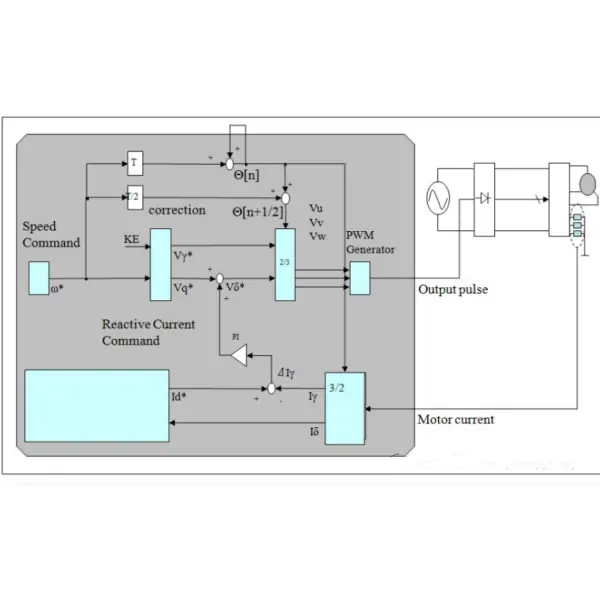
• Motor control algorithm implementation affects both efficiency and acoustic noise performance.
• Component selection must consider manufacturing volume, supply chain considerations, and long-term availability.
6. Recommended IGBT Module Models
STARPOWER Product model selection guide for this application
| Model | Voltage | Current | Package | Topology |
|---|---|---|---|---|
| DG40F07TAFM | 650V | 40A | T2 | – |
Showing 1 representative models out of 1 total available modules.