
1. IGBT Control Modes in Welding
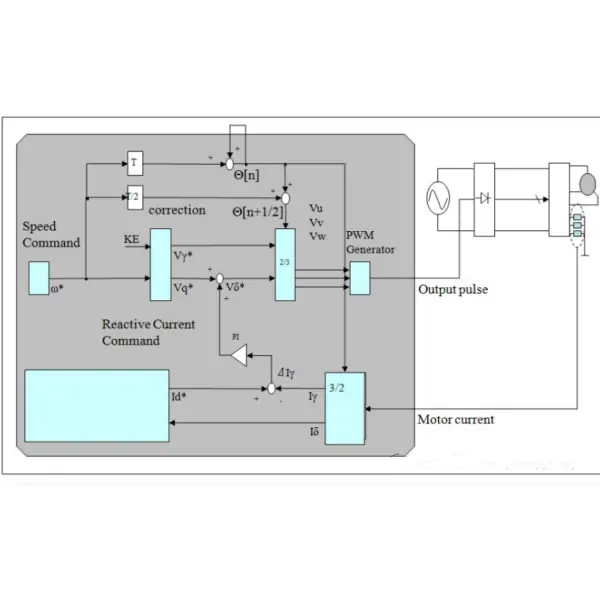
Welding machine IGBT implementations primarily employ two control approaches: hard switching and soft switching.
• The fundamental difference lies in switching behavior – soft switching theoretically eliminates IGBT switching losses, leaving only conduction losses.
• In domestic welding machine designs, hard switching implementations typically use pulse transformer direct drive, while most soft switching designs leverage established soft-switching techniques.
2. Hard Switch vs Soft Switch Considerations
In practical production, some welding machines designed for soft switching operation actually function in a mixed hard-soft switching mode due to circuit design variations and device performance drift.
• Based on extensive testing and field application experience, these mixed-mode machines generally achieve better performance and reliability when using hard-switching optimized IGBT modules rather than soft-switching optimized devices.
3. Topology Configurations
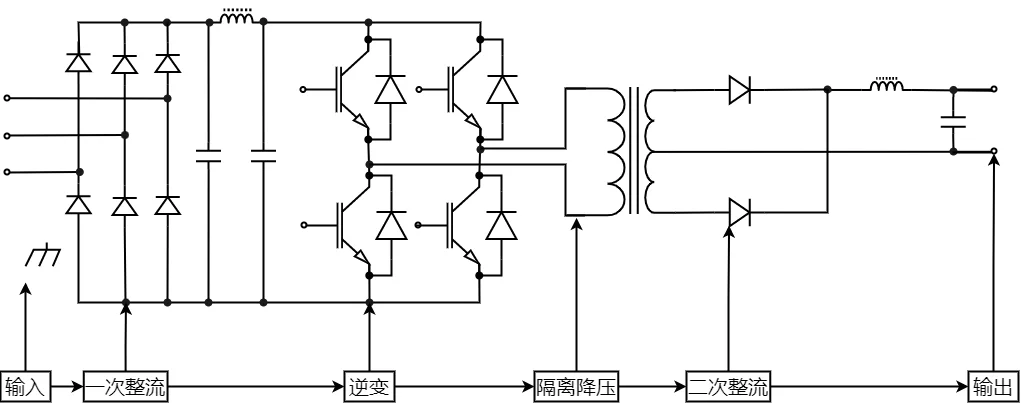
Welding machine IGBT applications are categorized by topology structure into full-bridge and half-bridge configurations.
• Half-bridge welding machines typically operate as hard-switching designs.
• The selection of appropriate IGBT modules depends on the specific topology, with different current and voltage requirements for each configuration.
• Standard reference designs assume 20kHz switching frequency with three-phase 380V input supply.
4. Recommended IGBT Module Models
STARPOWER Product model selection guide for this application
| Model | Voltage | Current | Package | Topology |
|---|---|---|---|---|
| GD150HFU120C8SD | 1200V | 150A | C8 | Half Bridge |
| GD200HFQ120C2SD | 1200V | 200A | C2 | Half Bridge |
| GD300HFQ120C2SD | 1200V | 300A | C2 | Half Bridge |
| GD400HFQ120C2SD | 1200V | 400A | C2 | Half Bridge |
| GD300HFX65C2S | 650V | 300A | C2 | Half Bridge |
| DG40H12T2 | 1200V | 40A | T2 | – |
| DG50H12T2 | 1200V | 50A | T2 | – |
| DG75H12T2 | 1200V | 75A | T2 | – |
Showing 8 representative models out of 14 total available modules.